Off Grid Stories: Building Flood’s Landing in Northern Ontario
By Mike & Wendy Tanner, floodslanding.com Mike and Wendy Tanner decided back in 2011 to make a life changing decision and follow their dream of going off grid by purchasing a campground in the backwoods of Ontario, Canada. This is their off grid story and how they built their dream.
From a hand-hewn log home in the south to a 16′ x 24′ cabin on the Frederick House River — Mike and his wife share the journey of buying a remote campground and building it back up, one milled log at a time.
We are happy to talk about our experiences that we’ve encountered on our adventure here in Northern Ontario.
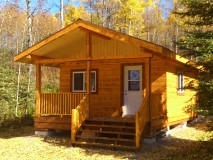
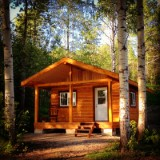
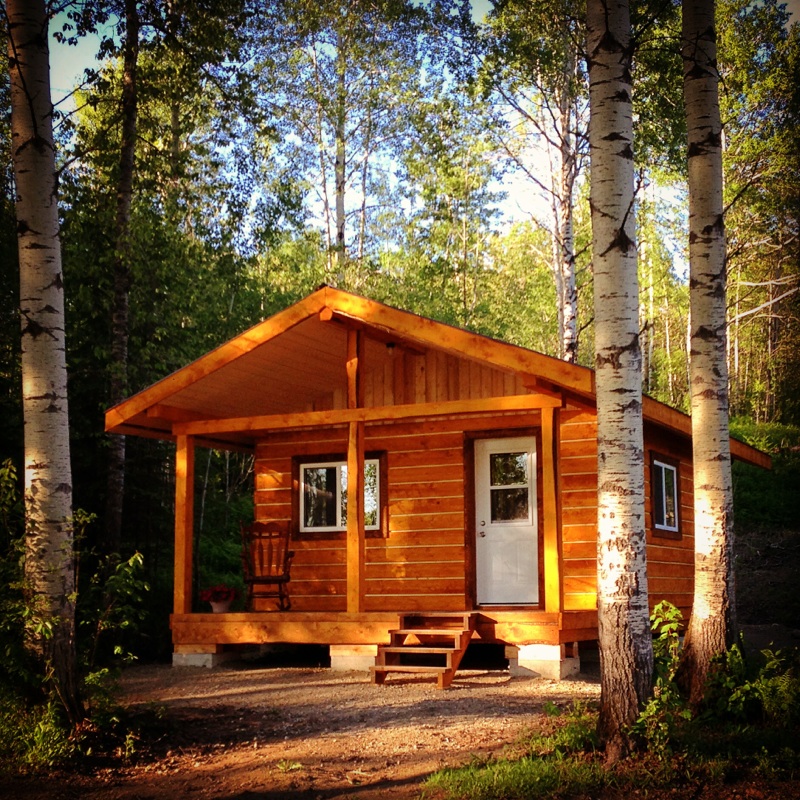
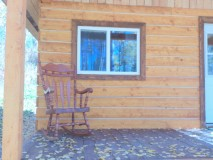
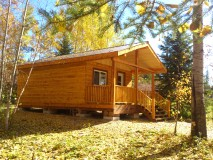
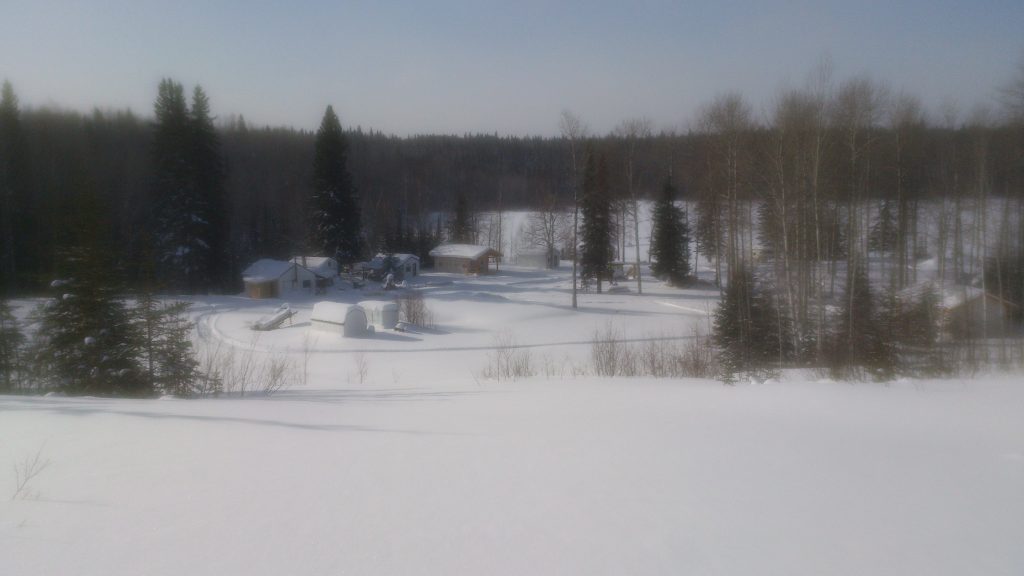
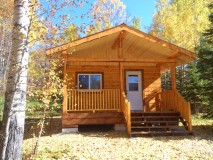
Mike and I decided in 2011 that we would like to do something different. We have always enjoyed the north, along with hunting and fishing, so we decided to look for a lodge to buy and run. We spent the winter of 2011 and spring of 2012 looking at various lodges all over northern Ontario.
On Easter weekend we came north to Cochrane, about a 6½ hour drive from our home in Washago, and looked at “Flood’s Landing”—a campground on the Frederick House River consisting of 130 acres and 6 small cabins. We had to walk in from the road—a 1 km walk—because the soft spring conditions of the driveway were not favourable to drive on.
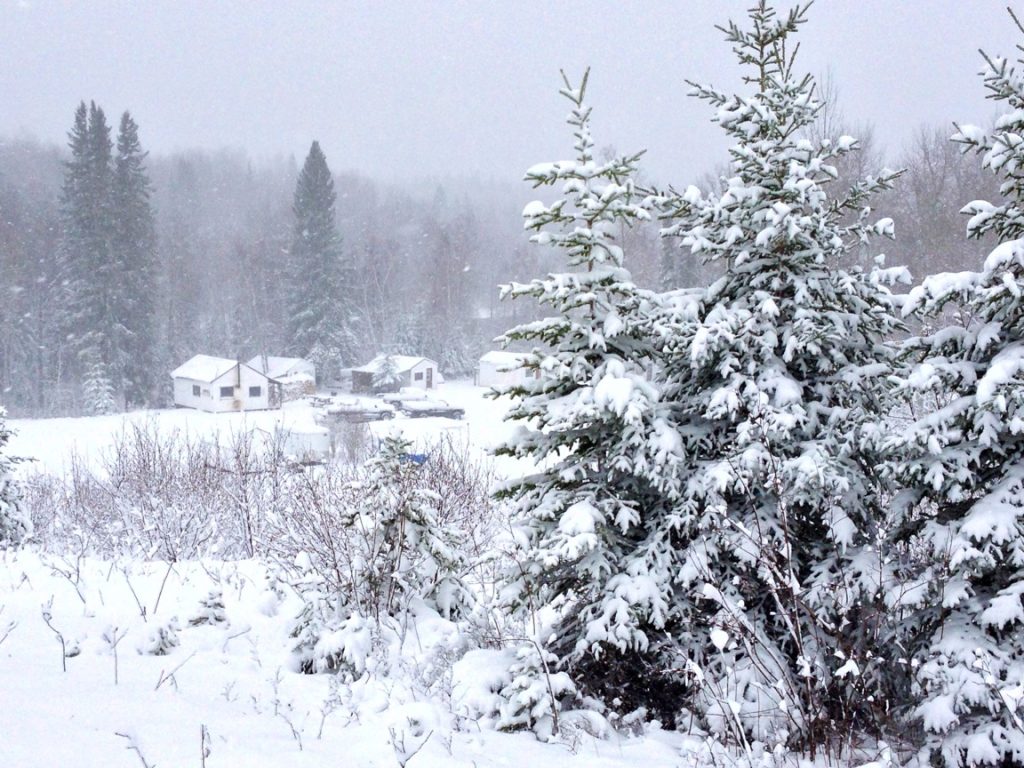
We were very intrigued to see this camp. The driveway into it was tree-lined and after 1,000 feet of going straight it rounded a bend and overlooked the rapids in the river below to our left. It continued to wind down a hill and around 2 more bends before we came to the 6 little cabins and the campground beyond.
We were sold on it just from that walk in. It was exactly what we were looking for: private and semi-remote, road accessible, lots of land, and the river. We were very excited to see what it held around the bend. We saw great potential, made an offer, and before the end of the weekend the seller had accepted.
The journey began!
We moved in the middle of May 2012 and listed our house in Washago for sale. We went from a beautiful hand-hewn log home, which we purchased in 2008 and renovated with a brand new 32′ x 40′ garage that my husband built, to a 16′ x 24′ one-room cabin with a wood stove, a propane stove/oven, and a generator for power.
It had no indoor bathroom, no septic, no well, no hydro, and no phone. It was a change of lifestyle as well as a change of address.
The first year we cleaned up the property, cut the grass, and met our seasonal campers who were already tenants prior to us becoming the owners. We learned where the fishing holes were, explored our property, photographed all the wildflowers and critters we came across, and thought about where we would like to build our home and how we would build it.
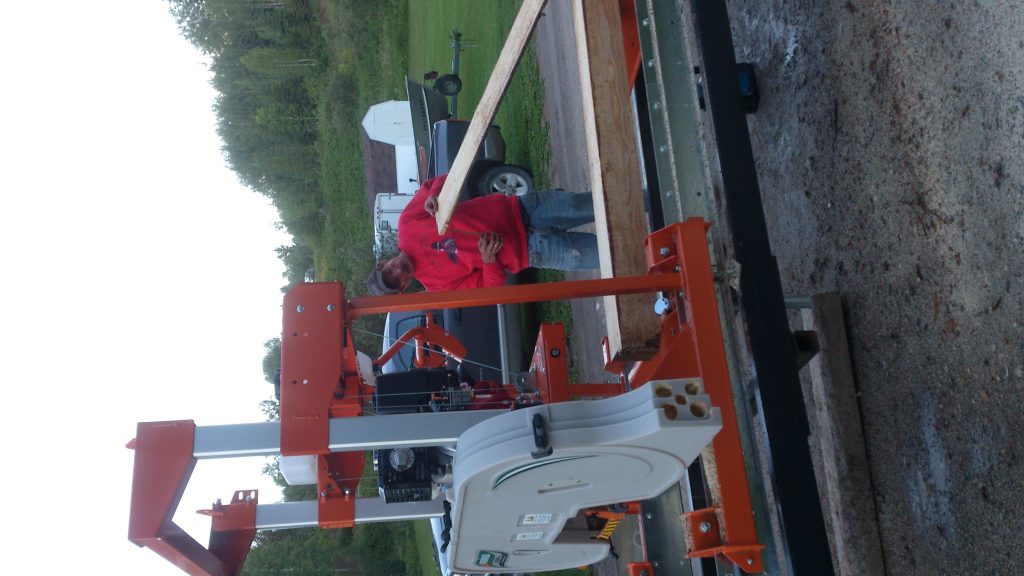
With all the timber available on our property we decided to purchase a sawmill and build everything, as much as possible, ourselves. Our house in Washago sold in September of that year and we started making our plans to begin building the new rental cabins and hopefully a home in 2013.
We purchased our Norwood sawmill in the summer of 2013, and we vow we will never be without a sawmill ever again! It has been a huge learning experience just in the process of milling the logs—from going out and selecting and cutting them with a chainsaw, to hauling them out with our little bulldozer that we found for sale here in Cochrane, and milling them.
Our property is under the Town of Cochrane limits, therefore we need building permits for everything we construct.
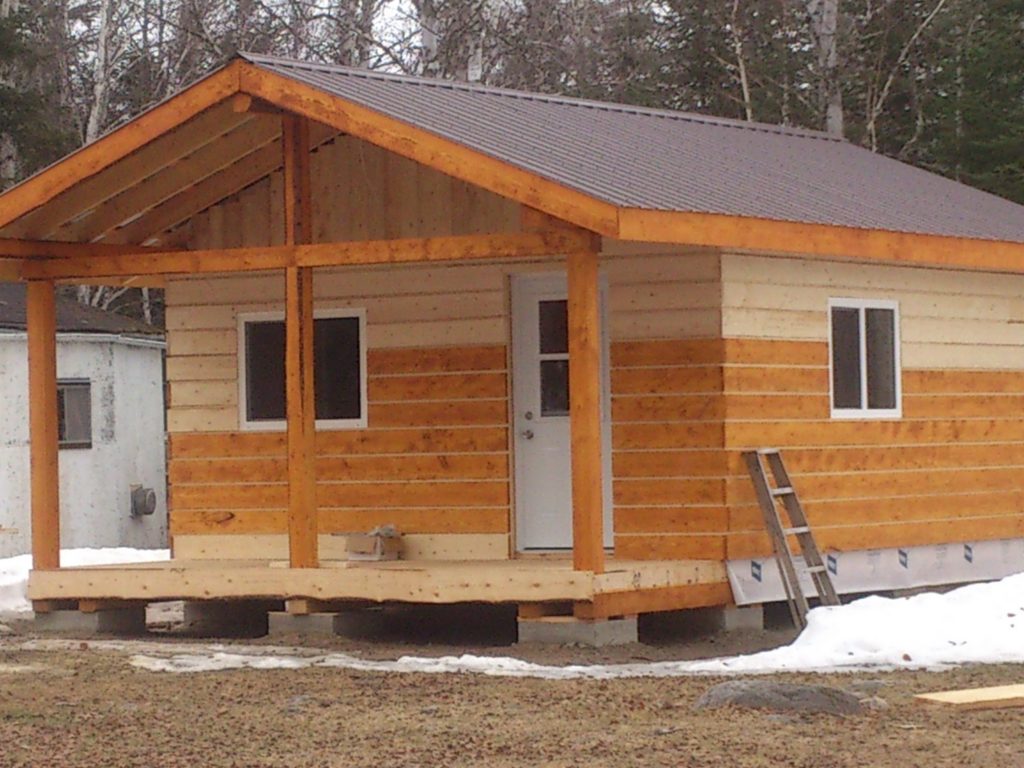
Our plan is to be open in the winter to rent the cabins to snowmobilers, so to get the greatest warmth in our cold winters we decided that instead of going with full log walls, we would do a post and beam interior that extends out on the porch, and put up exterior log siding.
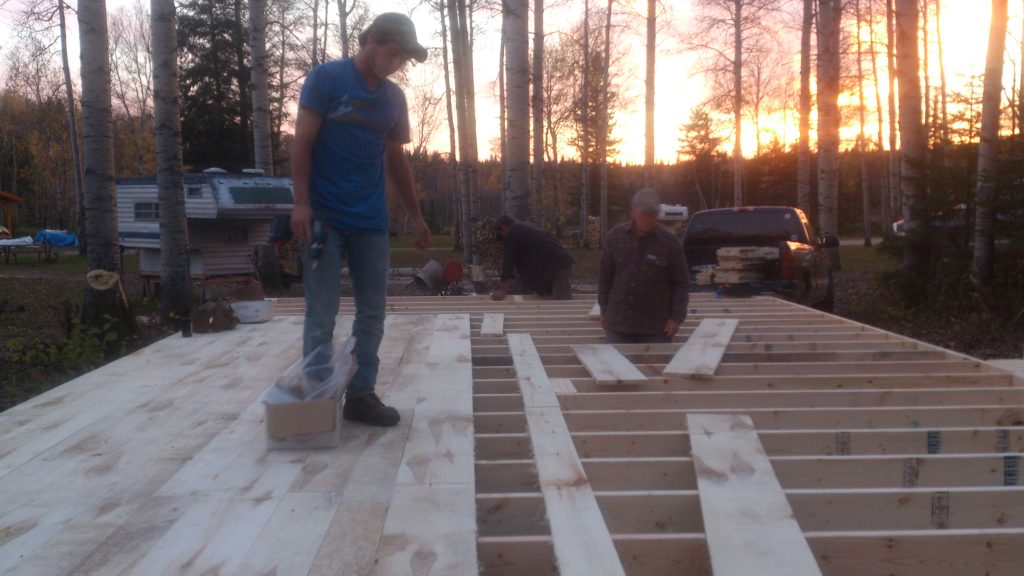
Our walls are studded with 2″ x 6″ boards, insulated, and vapour barriered. The ceiling rafters are 2″ x 8″ and insulated and vapour barriered as well. The floor has 1″ poplar boards with tar paper laid down underneath blue styrofoam insulation, then topped with plywood that we will be covering with poplar off our mill to finish.
When the cabins were completed we finished all the wood and beams with Sikkens Cetol Natural stain. We love the warm and ambient look this gives the cabins, especially at night when the generator lights them up.
We had the cabins wired for a generator to plug in, and in the next year we are exploring our options for going with solar and wind power. The cost of water is too high and we like the idea of being off the grid. Our plan is to have 6–8 new cabins, a central washroom/shower building, and a store/office/dining room when we are complete.
We have been putting our focus on the business, so we haven’t started our home yet. This is the beginning of the 3rd winter that we’ve been in our little cozy cabin, and although last fall we had a well drilled and a septic bed installed, the summer bathroom is now decommissioned because the lines will freeze—and we are back to the loyal outhouse for the winter.
All good things come to those that are patient, and the experience wouldn’t be the same if we had everything we left behind in the south.
“We find we notice little things with all the changing seasons, from animal tracks in the snow to northern lights in the midnight sky and the sound of the water rushing over the rapids as the snow melts in the spring.”
And so much more. To anyone thinking of doing something like this, all we can say is: it is a journey, there will be ups and downs, but it is all part of the adventure—and the learning never ends.
At this time we have 3 cabins completed—“NorthView,” “Poplar Ridge,” and “The Moose Shed.” Our fourth is started, and in the spring of 2015 we will begin our main building to have it completed before fall, with water and a washroom that can be used year-round. Perhaps if the building season allows and things go well, we will begin our home, too.
Our cabins are 16′ x 20′ with a 6′ porch—a one-room, open-concept layout with 2 double beds, a propane stovetop, a propane furnace, table and chairs, and all dishes and cooking utensils provided. They do not contain washrooms, as we are building the central washroom/shower facility for all to use.
The cost of the materials to build one cabin—including windows, door, steel roof, insulation, propane furnace, stovetop, the cost for a licensed electrician to fit them for a generator, and the propane contractor to run the propane lines—is approximately $13,500.00 complete.
The headboards for the beds we made with the sawmill, and if we had purchased all the lumber it would have cost closer to $22,000.00. We gained additional savings because we constructed the cabins ourselves, except for the electrical and propane components. Because the cabins are for commercial use, the electric and propane needs to be done by licensed contractors.
The process of cutting logs takes a bit of time due to the drying. This past year on Easter weekend we cut down and hauled out all the trees we need for the third cabin, but then we waited about 4 months to mill them, and piled the lumber so it could dry with air around it. We preserve the wood when we build with it, and as long as there is no direct heat they have done well. (Direct heat as in from a furnace in winter. We haven’t rented them in the winter as of yet, but plan to.)
Fuel is expensive here in the north, so it is our biggest ongoing expense. It is currently $1.25/litre, but has gone as high as $1.40/litre. We use it in the sawmill, dozer, backhoe, generators, and chainsaws.
Flood’s Landing sits on 130 acres along the Frederick House River near Cochrane, Ontario.